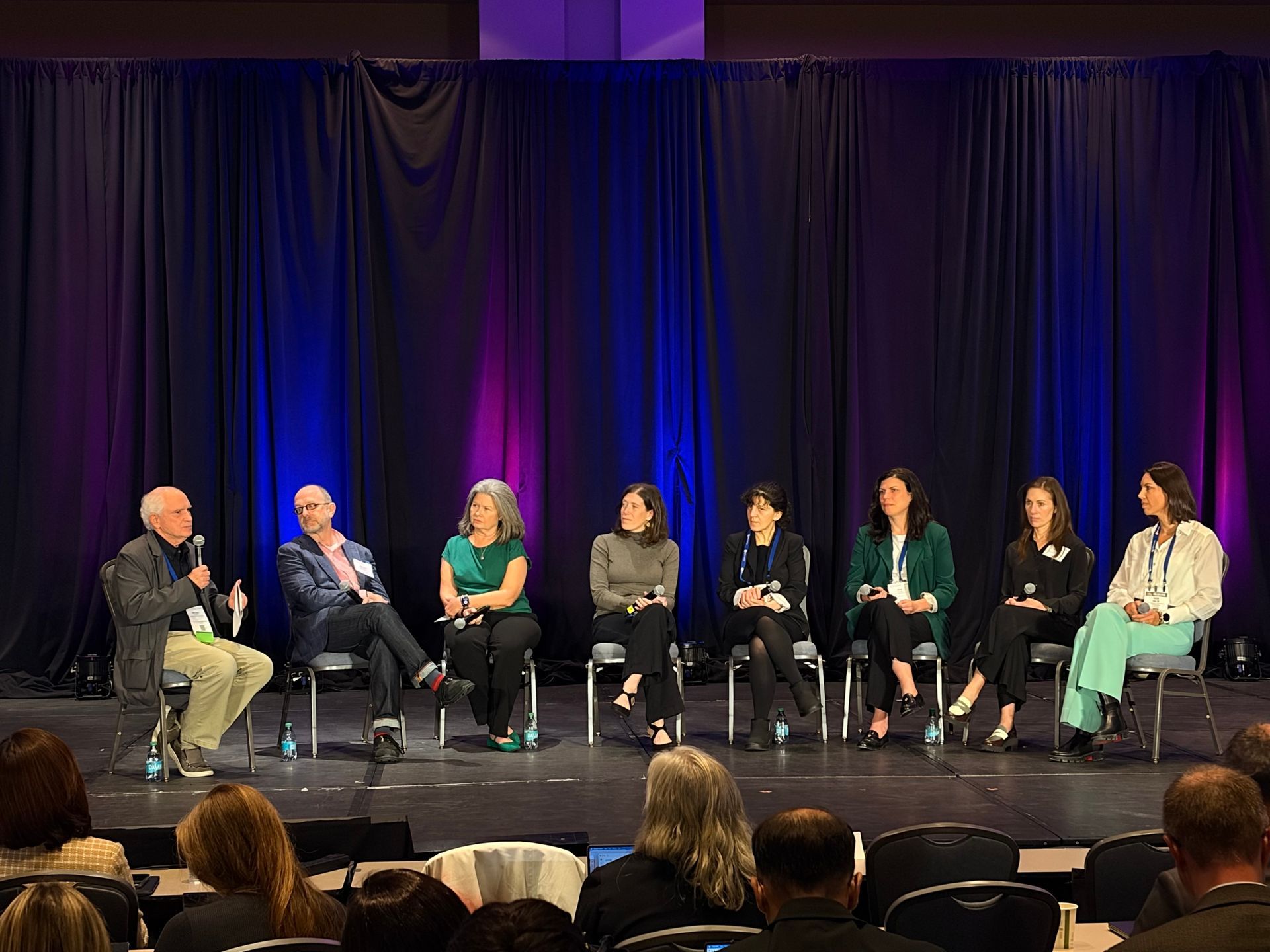
Photo caption: Our own President, Amanda Haddock, shared the stage during a session focused on clinical trials. That session was moderated by Dr. Michael Prados, UCSF, (far left) and included (left to right) Dr. Samuel Blackman (Google), Amanda Haddock (Dragon Master Initiative), Dr. Sarah Learly (Seattle Children’s Hospital and DMI Advisor), Dr. Maryam Fouladi (Nationwide Children’s Hospital), Dr. Amy Barone (FDA), Dr. Ashley Margol (UCLA Children’s Hospital), and Dr. Cassie Kline (Children’s Hospital of Philadelphia).
From My Understanding to Yours
Austin Pearson • November 22, 2026
Most days, my work at Dragon Master Initiative involves administrative work and managing our run team. I spend a lot more time helping people support the research than I do talking about the science itself.
So it was a real change of pace last week, when I attended the PCX Innovation Summit to learn more about the work our community helps make possible.
I’ll be honest: I didn’t understand every technical detail. I’m pretty sure my mind was a ball of mush by the end of the day. There were a lot of acronyms and some complicated demonstrations for my brain to process. The crazy thing is, I was told those weren’t even the most complicated discussions happening that weekend!
But the moment that stayed with me most came at the very end, when a lady named Vanessa Hugo spoke about her husband and niece and their experiences with brain cancer.
She spoke with so much passion and determination. Listening to her took me back to when my brother was going through treatment. I remember that same determination in my mom when he was in the thick of it. The need to keep looking, keep asking questions, and find something that might help. And let’s be honest, she still has all of that.
That feeling was familiar, even when the science wasn’t. It brought everything we had heard that day back to the people this work is for.
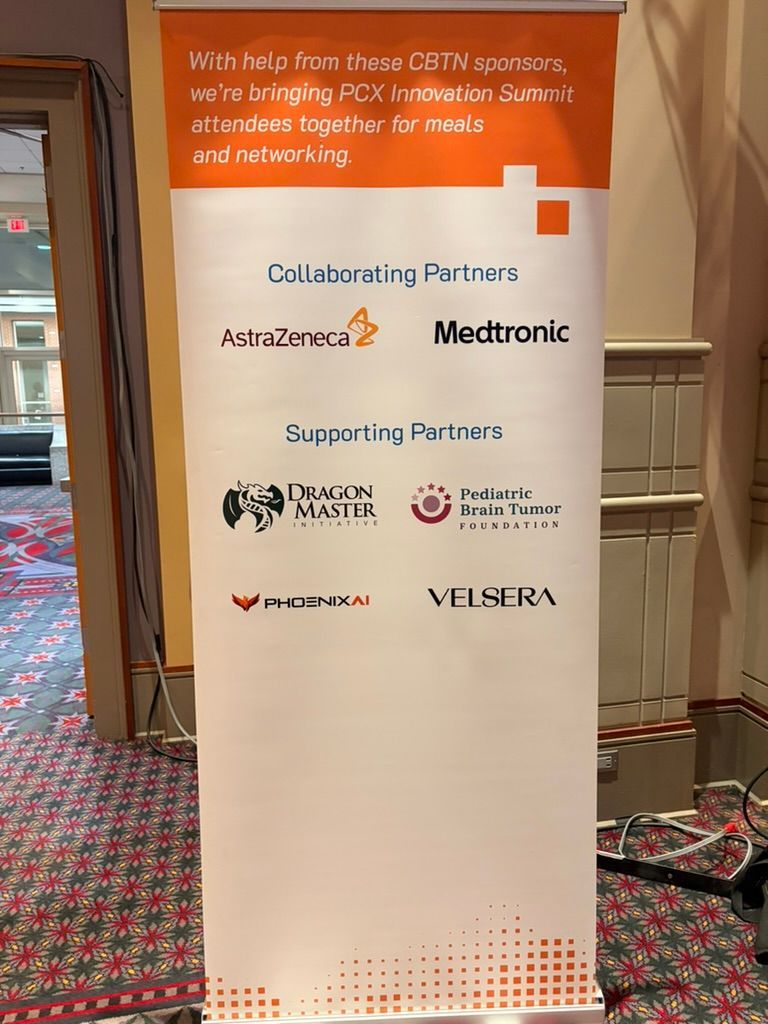
When people ask me what Dragon Master does, I usually explain it like this: we help fund a database that allows doctors and researchers to share information, so others can use it in their own work and help us find cures faster.
The conference helped me put some examples behind that explanation.
When a child is diagnosed with a brain tumor, their medical information begins to tell a story: scans, test results, treatments, side effects, and what happens next. But those pieces often live in different places. One hospital may have the scans. Another may have treatment records. Important details may be buried in documents that someone must read and organize by hand. Families end up carrying giant binders and discs of medical images around with them to the different hospitals their child needs to visit.
Now imagine trying to learn from the experiences of many children treated at different hospitals. Researchers need to know more than whether those children had the same diagnosis. They need details about their tumors, the treatments they received, and what happened over time. Even comparing two or three children’s experiences could mean working through a mountain of records.
Bringing those pieces together can help researchers ask better questions and give care teams a more complete picture of a child’s experience. That’s where some of the work we saw at the summit comes in.
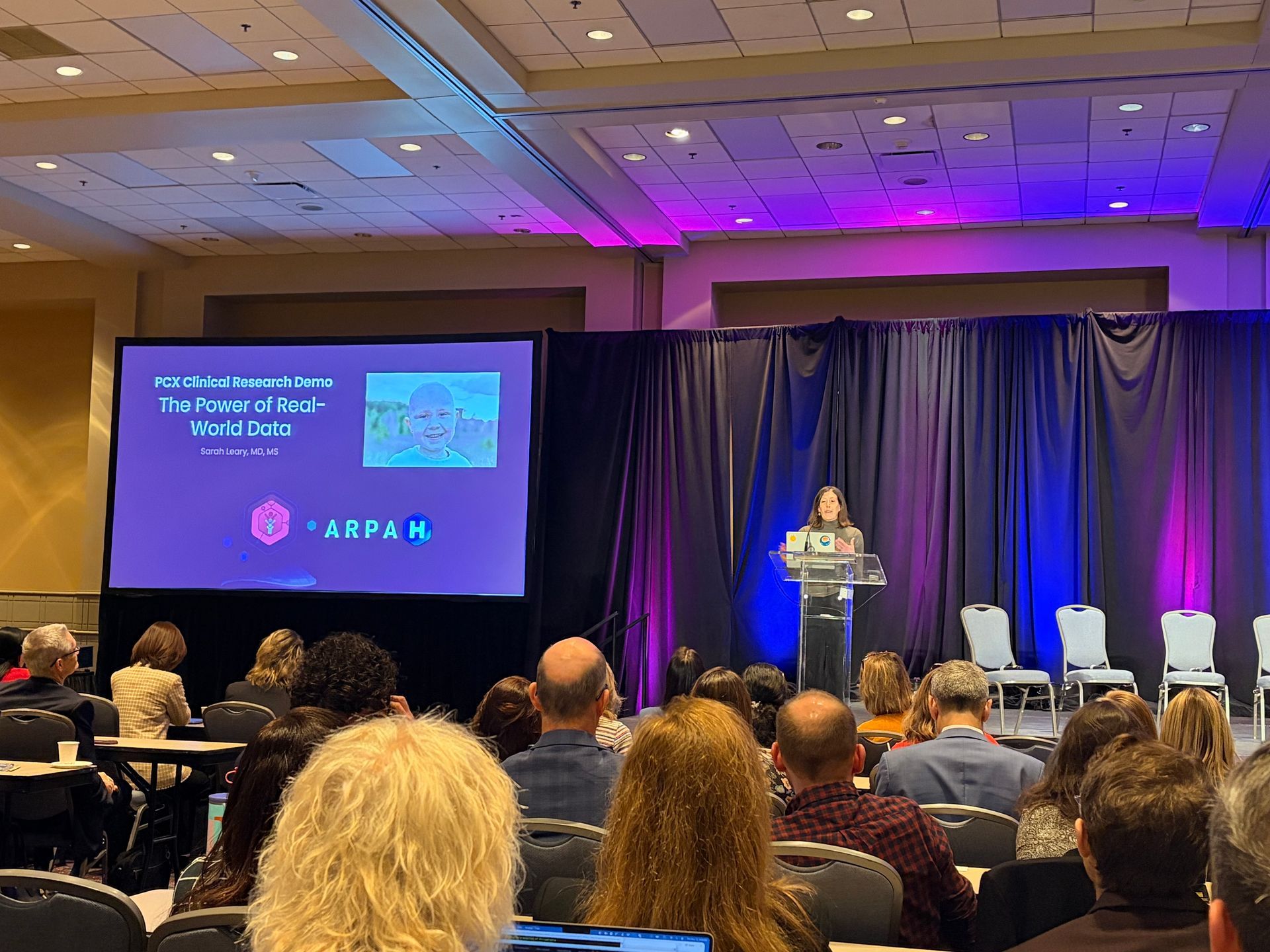
If you are like me and have never heard of PCX or ARPA-H, allow me the honor of introducing you to them. I think we will hopefully see a lot more of them in the future.
PCX stands for Pediatric Care eXpansion, a program from the Advanced Research Projects Agency for Health, or ARPA-H. Beginning with pediatric brain cancer, it aims to connect information across more than 200 pediatric hospitals and care centers, with privacy and security controls governing access. You can learn more about PCX here.
Side note: Why did they start with brain cancer? In large part, it’s because of how “shovel ready” the data was. All that work that you’ve funded through Dragon Master Initiative for the last 13 years meant that we had a robust dataset for comparison. It meant we knew how to define “good data” and exactly what needed to come out of the medical record to be harmonized with the genomic and imaging data. PCX started with brain cancer because YOU saw the vision to support data sharing.
At the summit, teams demonstrated tools that organize medical records into a timeline, helping specialists review which treatments a child received and when. Other demonstrations explored preparing information for discussions about a patient’s care and reviewing possible clinical trial eligibility.These tasks can require hours of searching, reading, and checking. Making them easier could give care and research teams more time to focus on the questions those records might help answer.
In a demonstration focused on medulloblastoma, a childhood brain tumor, researchers used connected records to compare treatment experiences and survival across groups of patients.They could narrow the information by treatment and tumor subtype, looking more closely at children whose cases had important things in common. The demonstration explored how information from care outside a clinical trial could add to what researchers had learned in the trial.
That doesn’t mean a comparison on a screen can tell us which treatment is best. Researchers still have to account for differences between patients and carefully evaluate the evidence, but it showed why sharing detailed information is valuable. A question that one hospital has too few cases to study may become more approachable when researchers can learn across institutions.
For rare tumors, that matters a lot. (By the way, ALL childhood cancers are considered rare.)
Researchers also discussed how to capture more of a child’s story over time. One discussion focused on something I hadn’t thought much about before: what happens after a child leaves a clinical trial.
A child may go on to receive other treatments, but detailed information about that later care may never make it back into the trial’s records. Connecting those records could help researchers understand more of the child’s experience and learn from what happened next.
Another presentation, about the M3 Initiative, explored bringing together detailed radiation treatment information and later measures of memory, learning, and other abilities. Knowing that a child received radiation is useful. Knowing more about where the radiation went, the doses different areas received, and how the child did afterward could help researchers ask much more specific questions about lasting effects.
Those discussions were a reminder that researchers need to understand both how long children live and how treatment affects their lives.
There was also work presented on making it easier to move complete medical imaging studies into authorized research settings. Scans are another important piece of the story, and making them available for research can require substantial coordination.
These examples helped me see how much useful information can exist without being easy to study and how much effort is going into changing that.
These tools are still being developed and tested. People need to check the information for accuracy, protect patient privacy, and make sure it is appropriate for the questions being asked. The demonstrations included human review of information extracted by AI. There is a lot of careful work behind making these tools useful and trustworthy.
Seeing that work helped me better understand the importance of the shared research resources our community supports. When I tell someone their donation helps fund a database, these are the kinds of possibilities behind that explanation: helping people connect information, learn from one another, and make more of each child’s experience available for research.
And that brings me back to Vanessa and the determination I recognized in her voice.
After a day of hearing about records, platforms, and research tools, her story brought me back to why any of it matters. Families are trying to make decisions, understand their options, and find something that might help someone they love.
I know that determination from the perspective of my own family. We want more answers. We want better options. We want the people we love to have more time.
I wanted to share this because so much of the work our community supports happens outside public view. It can be technical, complicated, and difficult to explain. But there are people making those connections, testing new tools, and finding ways to learn more from the information we already have.
To everyone who supports Dragon Master: thank you for being part of that work. I’m still learning how all the pieces fit together, but I came home with a clearer picture, and I hope this gives you one, too.
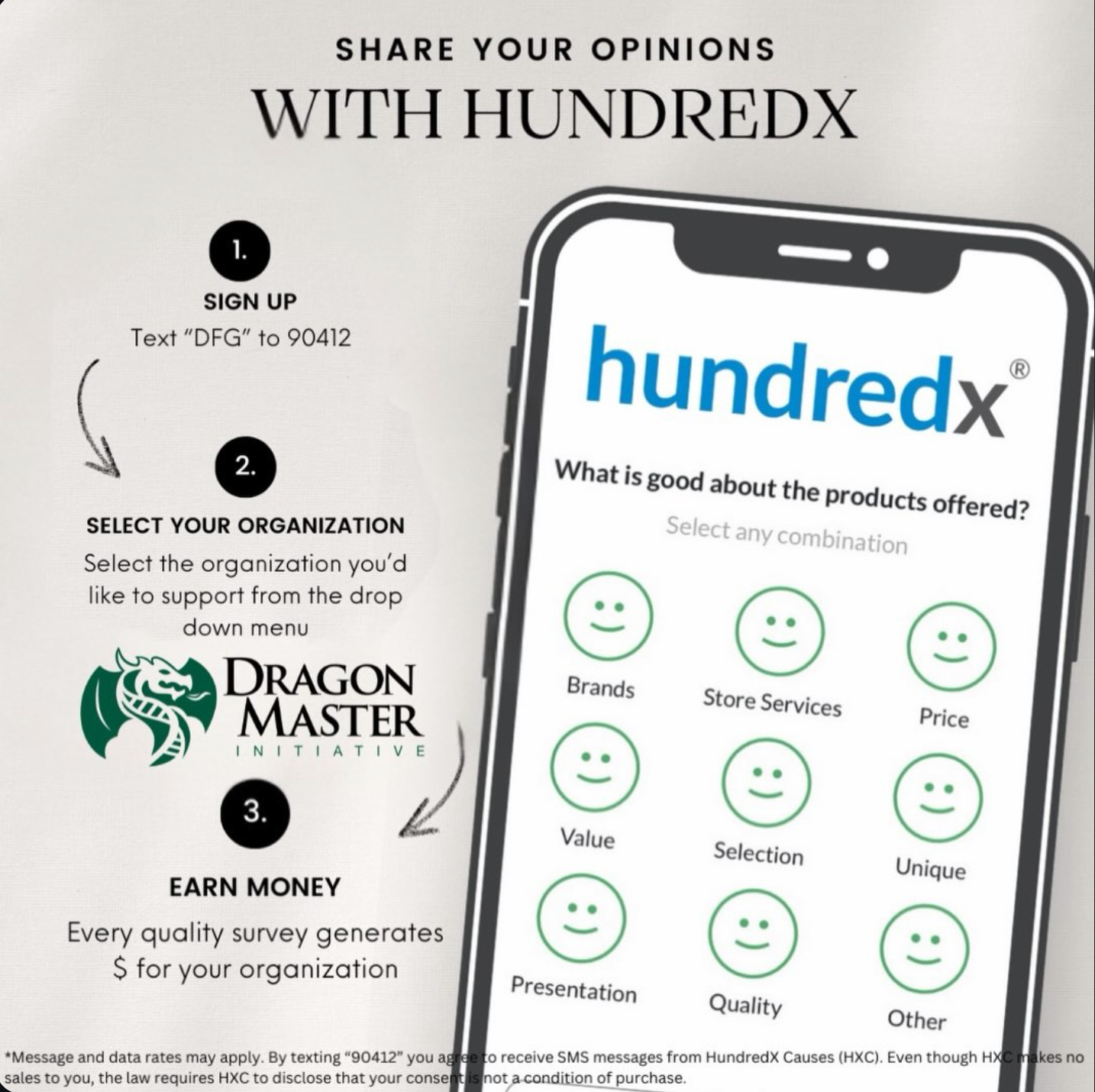
Turn Your Opinions Into Cancer Research Funding!
Press Release: NACE and Dragon Master Initiative Announce Partnership
Do you remember those group projects you were assigned in school? The ones where you secretly crossed your fingers and hoped you got the right group members? There was usually the bossy one. The one who did everything. The one who disappeared until the night before the project was due. And, if you were really lucky, the person who somehow kept everyone moving in the same direction. I remember them. They were stressful. They were frustrating. There was usually some anxiety, a last-minute rush, and at least a little bit of dictatorship involved. But somehow, when everyone finally did their part, something amazing could come out of that group project. I have to remind myself of that often in my role with Dragon Master Initiative. Because sometimes, I am frustrated with the group project we are working on. Sometimes I have a vision in my head, and I can see exactly what I want the finished project to look like. Then reality reminds me that I am not doing this project alone. And maybe that is exactly the point.
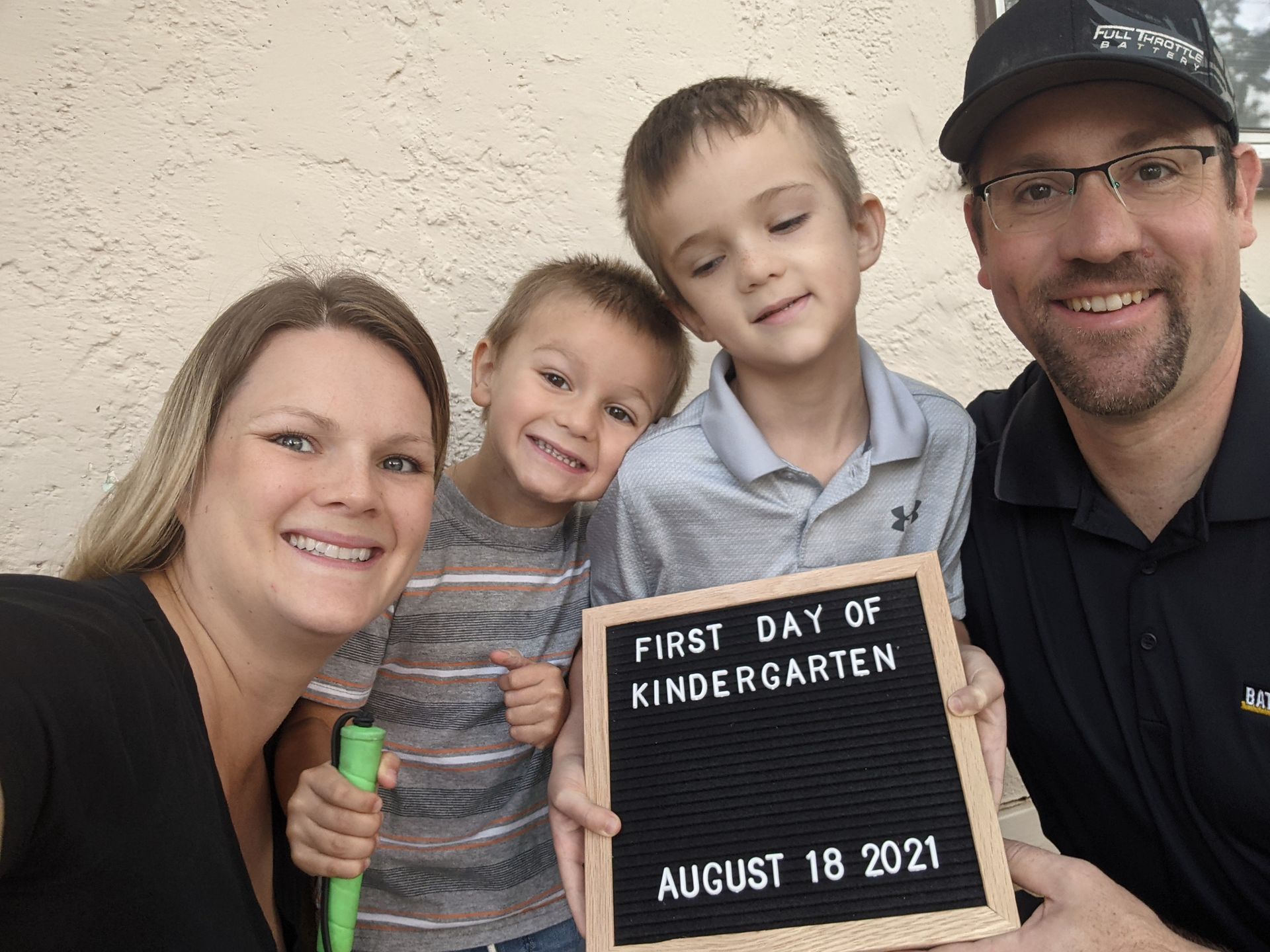

This is what we've been waiting for...
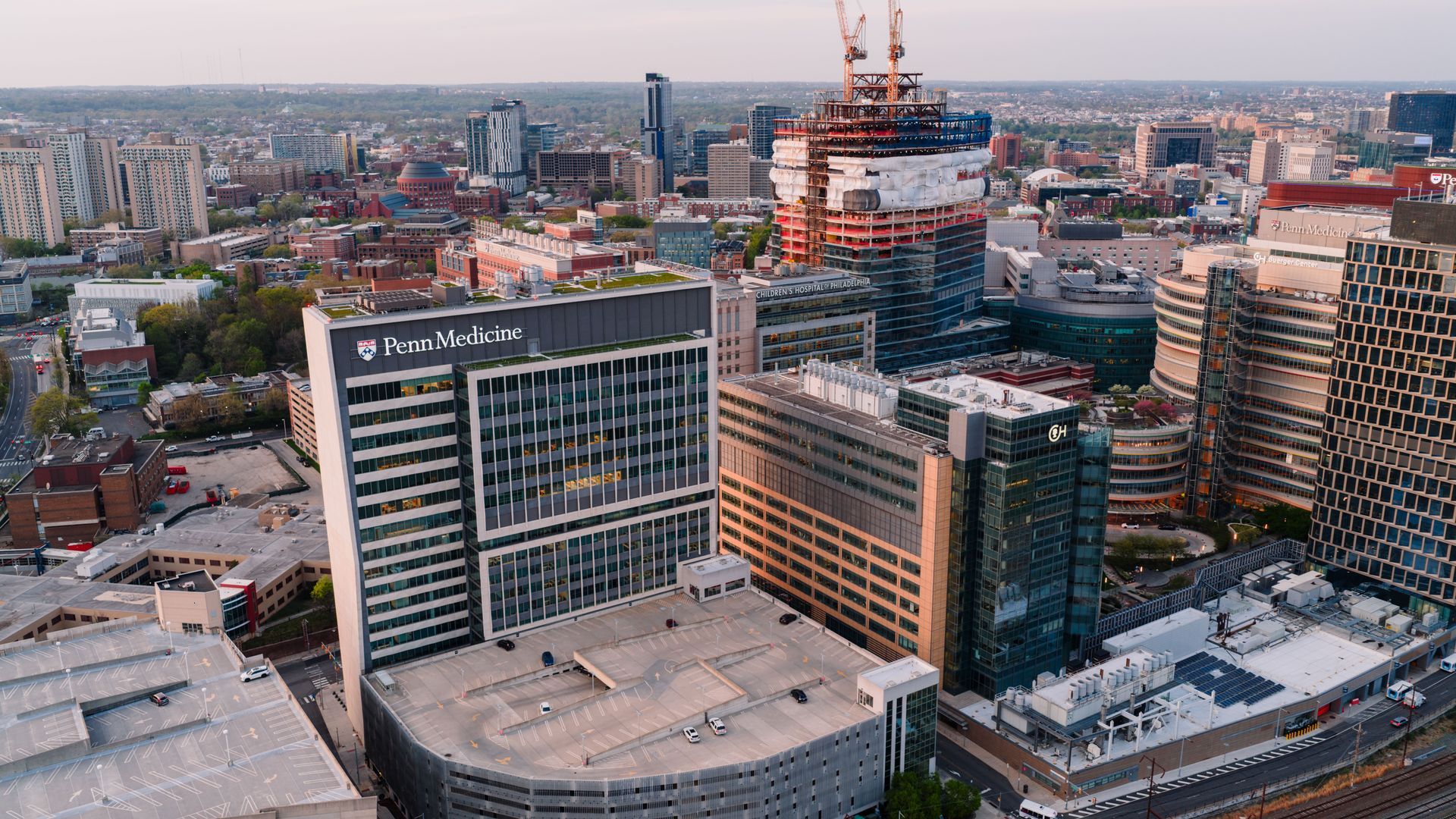
Letter from Stephen P. Hunger, MD to Dragon Master Initiative and its donors: Thank you for the generous support of the Children's Brain Tumor Network (CBTN) at Children's Hospital of Philadelphia. Your incredibly generous gift fuels a global effort to understand, treat, and cure diseases that affect so many children and their families. Because of you, researchers across dozens of institutions have access to critical dta and biospecimens that simply wouldn't exist without partners like you. Your generosity accelerates discoveries and brings hope to families whose lives have been turned upside down by a brain tumor diagnosis. your contribution supports breakthrough research at that accelerates cures and increases the well-being of children with the rarest and most difficult to treat conditions. We are deeply grateful for your actions and commitment to changing the future for kids with brain tumors, and for empowering scientists with the tools they need to move research forward faster. With your continuing generosity, it is just a matter of time, and time is precious. With sincere gratitude, Stephen P. Hunger, MD Professor of Pediatrics Associate Director (Pediatric Cancer), Abramson Cancer Center University of Pennsylvania Perelman School of Medicine Chief, Division of Pediatric Oncology Director, Center for Childhood Cancer Research Jeffrey E. Perelman Distinguished Chair in the Department of Pediatrics
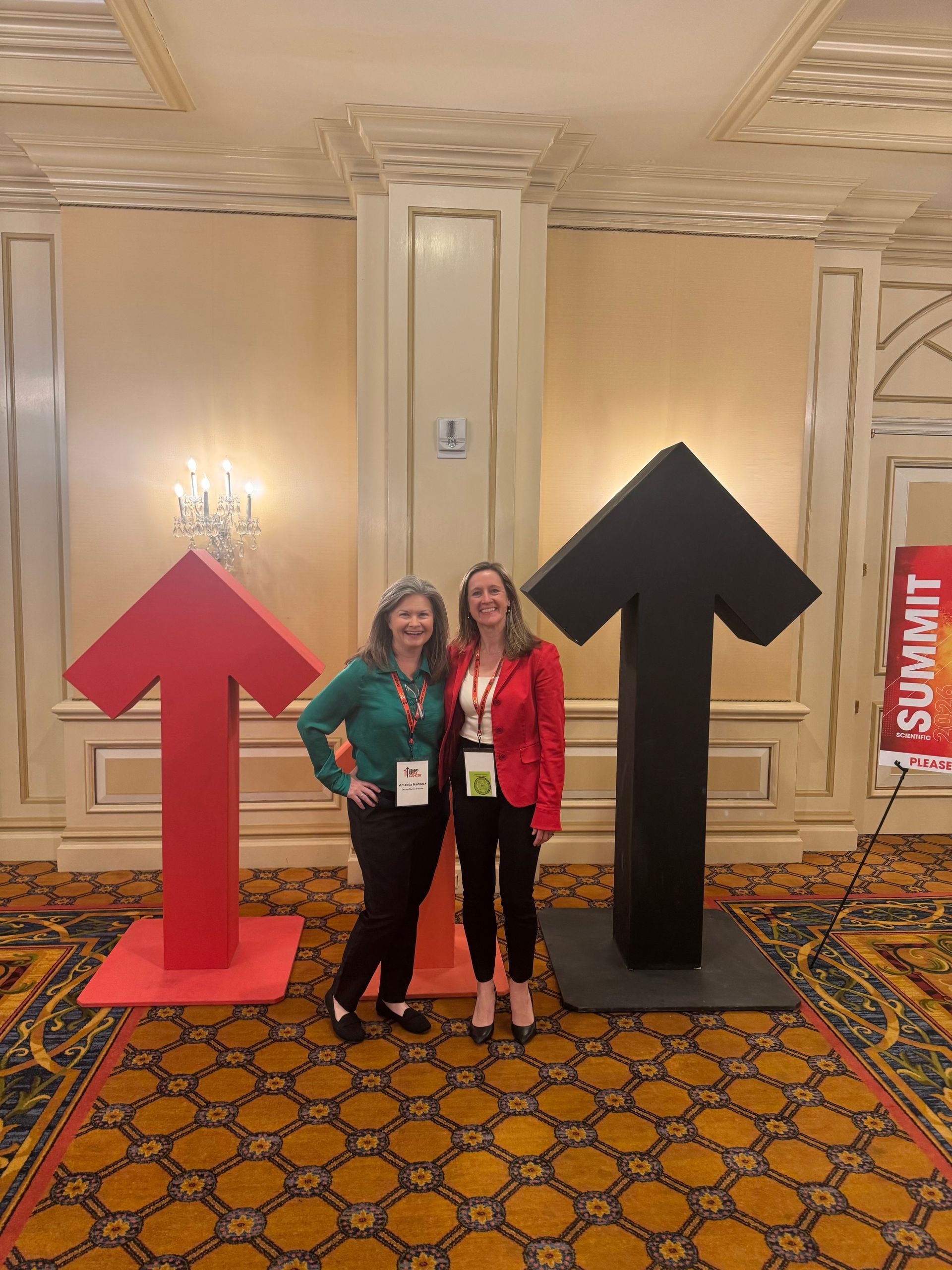
Stand Up To Cancer (SU2C) Malignant Glioma Innovation Summit - February 2026
Powerful reminder of innovation needed
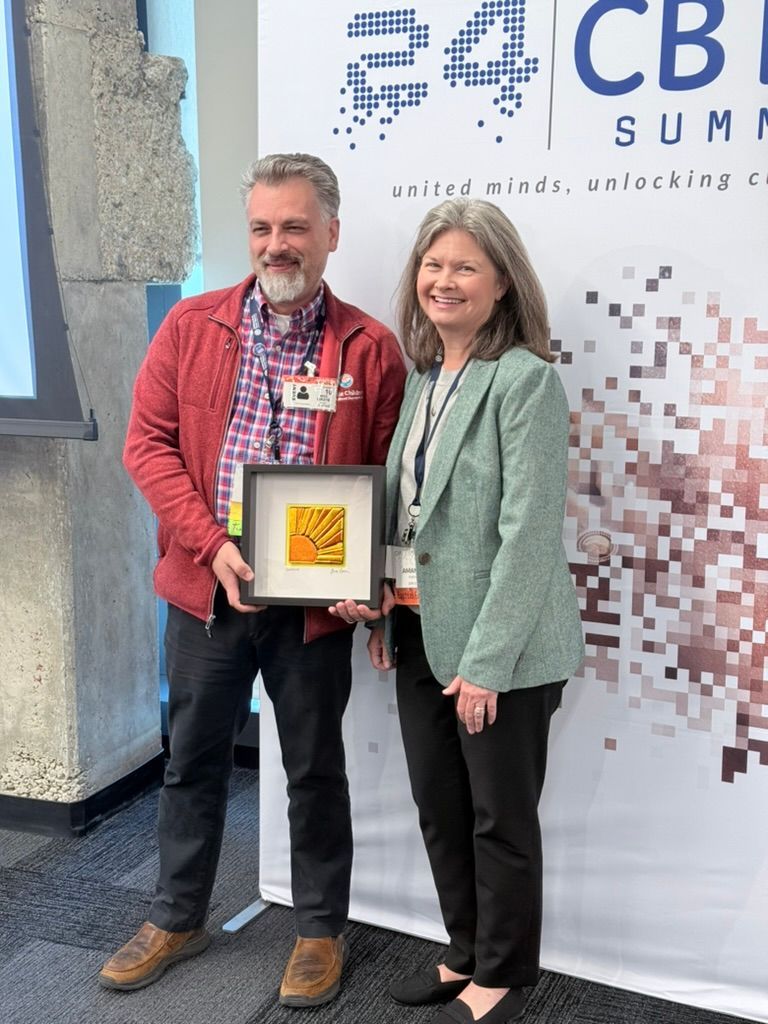
At the Children’s Brain Tumor Network (CBTN) Summit, held in Arlington, VA, from October 9-11, 2024, Jeff Stevens from Seattle Children’s Hospital was awarded the inaugural Sunny Award.